The 2022 eruption of the Mauna Loa volcano cut off road access to the Mauna Loa Baseline Observatory. Construction on the temporary Mauna Loa Access road was completed on 26 March, 2026.
At this time, there is no site access for the general public to the Mauna Loa Observatory and NOAA has not yet established a public opening date. GML and scientific partners are working together to bring mission critical scientific projects back online. It is still unclear when utility infrastructure will be replaced and power re-established to the site.
We will provide another update as more information becomes available.
Media contact: Theo Stein at (303) 819-7409 or theo.stein@noaa.gov.
Organization(s):
 University of California,
Davis
University of California,
Davis
What does this program measure?
Fine particle (PM-2.5) mass and elemental concentrations, in ug/m3
How does this program work?
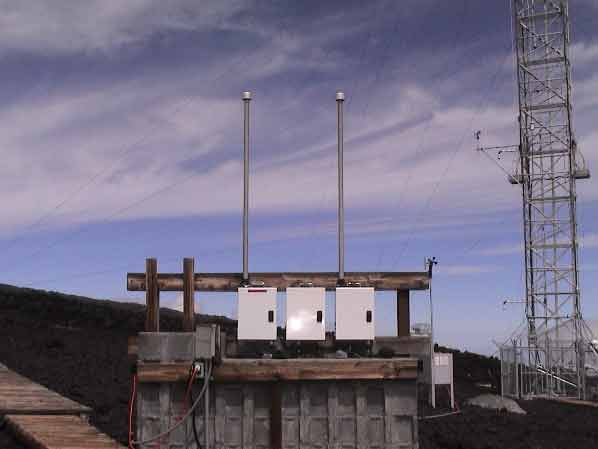
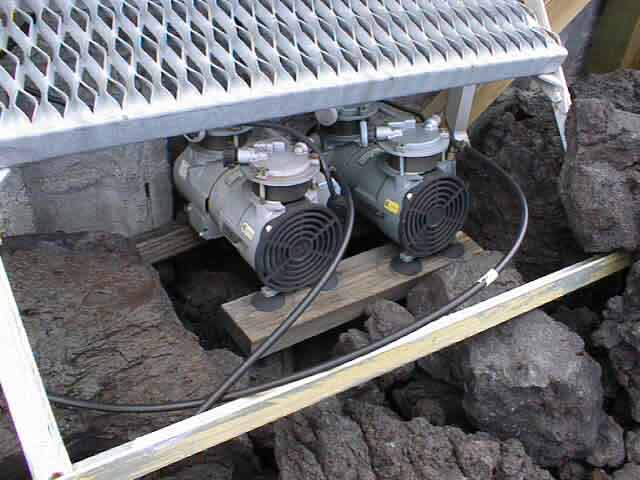
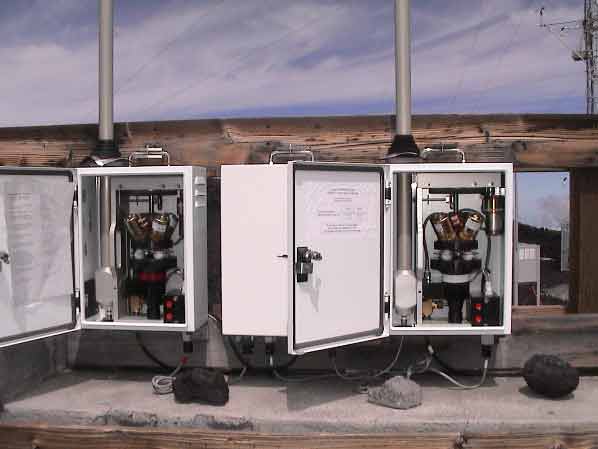
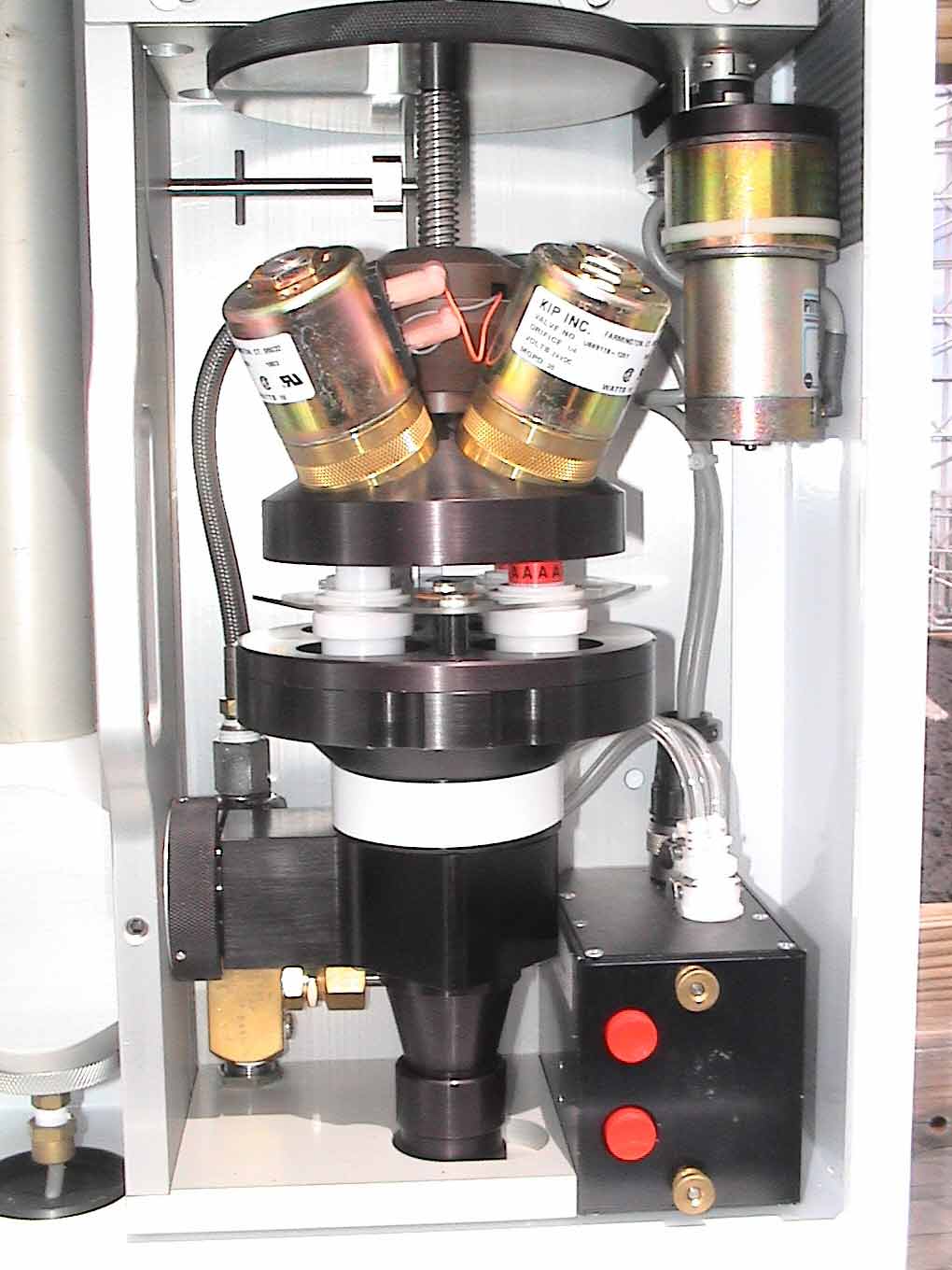
A multi-filter sampling system, the UC-DAVIS IMPROVE system is used for long term trend study. Fine particles are captured on filters after passing through a size-selective inlet to remove large particles. Specifically, one set of filters take the samples continuously and the other set takes samples only during times when down slope flow is expected. Particles >2.5 micrometers are excluded from the collected sample by passing the sample air stream through a cyclone separator. Each filter operates over a three day period. Filters are changed weekly. The filters are shipped to a laboratory where they are weighed and are then subjected to elemental analysis. Special studies involve rotating drum impactors (size, time, elemental compost ion) and HI-Vol filters (isotopes, chemistry).
Why is this research important?
To determine the diurnal (daily) behavior and long term trends of high elevation, global background fine particle concentrations.
Are there any trends in the data?
The purpose of this project is to obtain ambient atmospheric fine particle concentration data for size, time, and composition at MLO and to compare this data with similar samples from other remote Hawaiian and mainland locations, especially Asia. We are planning to use the MLO IMPROVE data to evaluate the long term changes in the output of Asian pollutants, since MLO is so closely coupled to Asia each Spring and Summer.
How does this program fit into the big picture?
What is it's role in global climate change?
These measurements provide insight into global background fine particle concentrations at high elevation in the mid-Pacific. Special emphasis is placed on those factors which affect radiative climate forcing and visibility. High time resolved aerosol data are then compared to standard MLO gas and optical data.
Comments and References
- Perry, Kevin D., Thomas A. Cahill, Russell C. Schnell, and Joyce M. Harris. Long-range transport of anthropogenic aerosols to the NOAA Baseline Station at Mauna Loa Observatory, Hawaii. Journal of Geophysical Research Atmospheres. Vol. 104, No. D15, Pages 18,521-18,533 (1999).
- Cahill, Thomas A., and Kevin D. Perry. Asian transport of aerosols to Mauna Loa Observatory, Spring 1994. Climate Monitoring and Diagnostics Laboratory, No. 23, Summary Report 1994-1995, U.S. Department of Commerce National Oceanic and Atmospheric Administration Environmental Research Laboratories/CMDL 94-95, pp 114-116.
Lead Investigator(s):
Dr. Charles E. McDade
530-752-7119
Mike Brown
530-754-9741
MLO Contact(s):
Trevor Kaplan
808-933-6965 (x226)
Paul Fukumura
808-933-6965 (x223)
Web Site(s)
http://vista.cira.colostate.edu/improve
Date Started
1998
Related Programs
Photographs: