The 2022 eruption of the Mauna Loa volcano cut off road access to the Mauna Loa Baseline Observatory. Construction on the temporary Mauna Loa Access road was completed on 26 March, 2026.
At this time, there is no site access for the general public to the Mauna Loa Observatory and NOAA has not yet established a public opening date. GML and scientific partners are working together to bring mission critical scientific projects back online. It is still unclear when utility infrastructure will be replaced and power re-established to the site.
We will provide another update as more information becomes available.
Media contact: Theo Stein at (303) 819-7409 or theo.stein@noaa.gov.
Organization(s):
 National Oceanic
and Atmospheric Administration (NOAA), Earth System Research Laboratory (ESRL)
National Oceanic
and Atmospheric Administration (NOAA), Earth System Research Laboratory (ESRL)
What does this program measure?
Solar Turbidity.
How does this program work?
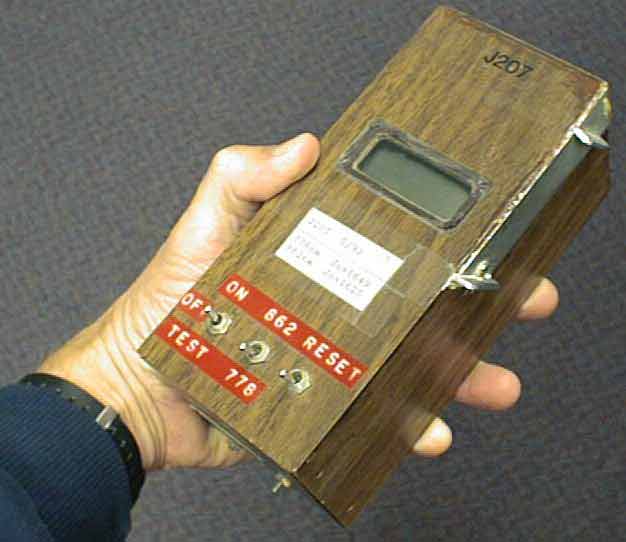
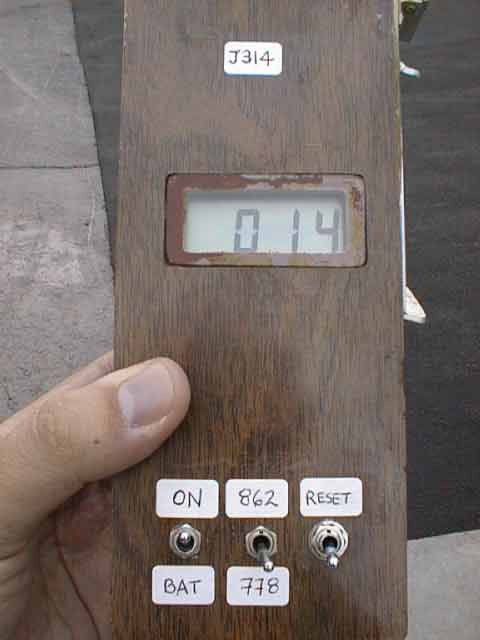
When this project was active, turbidity was measured three times per week at MLO with J-202 and J-314 sunphotometers at 380,500,778,862 nm, and continuously with MOD three-wave sunphotometer 380,500,778 nm; narrowband
Why is this research important?
Are there any trends in the data?
How does this program fit into the big picture?
What is it's role in global climate change?
Comments and References
This program is no longer active.
Lead Investigator(s):
Dr. Ellsworth Dutton
303-497-6660
MLO Contact(s):
Paul Fukumura
808-933-6965
Web Site(s)
not applicable
Date Started
RETIRED
Related Programs
Photographs: