


The 2022 eruption of the Mauna Loa volcano cut off road access to the Mauna Loa Baseline Observatory. Construction on the temporary Mauna Loa Access road was completed on 26 March, 2026.
At this time, there is no site access for the general public to the Mauna Loa Observatory and NOAA has not yet established a public opening date. GML and scientific partners are working together to bring mission critical scientific projects back online. It is still unclear when utility infrastructure will be replaced and power re-established to the site.
We will provide another update as more information becomes available.
Media contact: Theo Stein at (303) 819-7409 or theo.stein@noaa.gov.
Organization(s):
 Meteorological Research
Institute (MRI)
Meteorological Research
Institute (MRI)
What does this program measure?
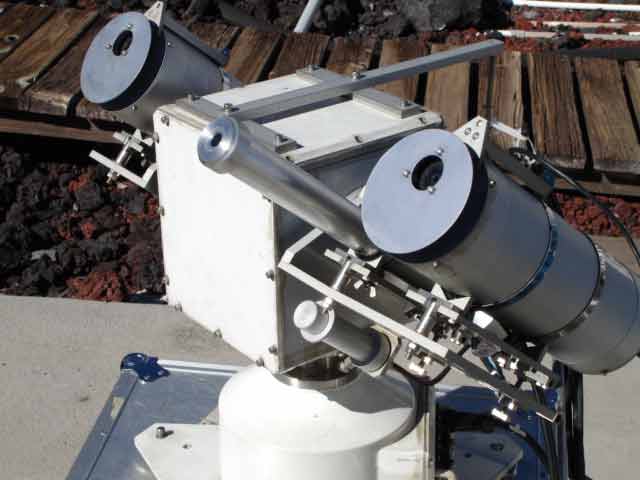
The solar direct irradiance , sky brightness (relative value), and optical thickness.
How does this program work?
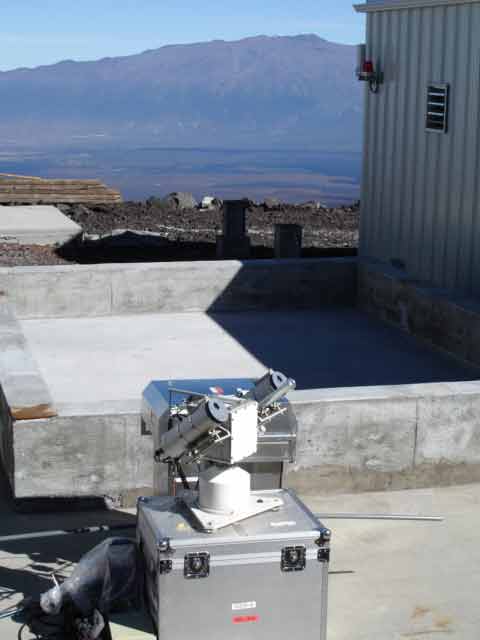
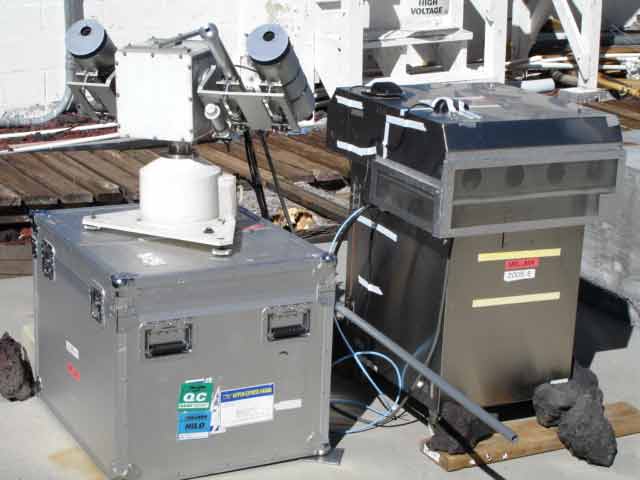
We estimate the amount of aerosol in the atmosphere from the attenuation of the solar direct irradiance and sky brightness.
Why is this research important?
We would like to know the aerosol amount in the atmosphere (aerosols are small particles in the air).
Are there any trends in the data?
We don’t check trends of our data.
How does this program fit into the big picture?
What is it's role in global climate change?
Aerosols in the atmosphere directly and indirectly change the earth's radiation budget. Therefore, they change climate.
Comments and References
We have a network to measure aerosol amount in the area of Japan and China. We must regularly calibrate the instruments to measure the solar radiation. The MLO is one of the best place to get the data for the calibration in the world.
Lead Investigator(s):
Akihiro Uchiyama
+81-29-853-8605
MLO Contact(s):
Dr. John E Barnes
808-933-6965
Web Site(s)
http://www.aeoliandust.com/users/uchiyama/index-e.html
http://www.mri-jma.jp/Dep/cl/cl3.html
Date Started
1994
Related Programs
Photographs:
see inset photos