The 2022 eruption of the Mauna Loa volcano cut off road access to the Mauna Loa Baseline Observatory. Construction on the temporary Mauna Loa Access road was completed on 26 March, 2026.
At this time, there is no site access for the general public to the Mauna Loa Observatory and NOAA has not yet established a public opening date. GML and scientific partners are working together to bring mission critical scientific projects back online. It is still unclear when utility infrastructure will be replaced and power re-established to the site.
We will provide another update as more information becomes available.
Media contact: Theo Stein at (303) 819-7409 or theo.stein@noaa.gov.
Organization(s):
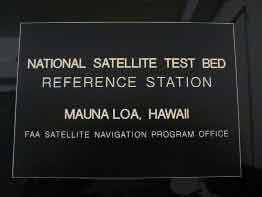
 Federal Aviation Administration (FAA) & Stanford University
What does this program measure?
A Global Positioning System (GPS) reference station at Mauna Loa facility is used to derive column water vapor profiles.
How does this program work?
The system operates continuously and remotely. GPS data is communicated to Stanford University in real time.
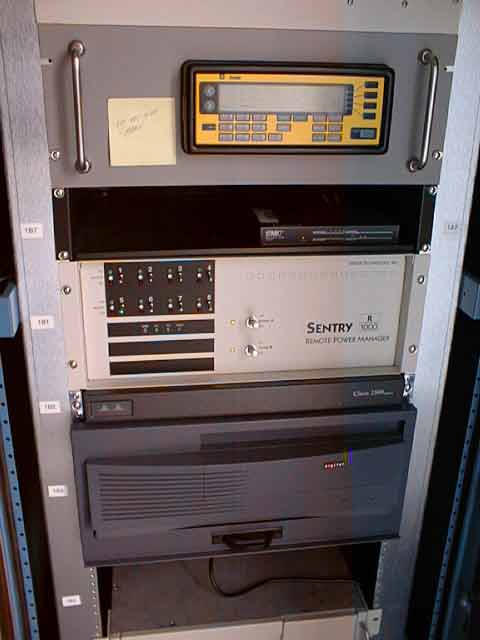
Instruments used include: computer, UPS battery backup, dual frequency GPS receiver, rubidium clock, weather sensor package, router, modem. A GPS antenna and a weather sensor will be mounted on the top of the tower.
Why is this research important?
The primary interest is to prototype the development of a high integrity wide area differential GPS correction service for aviation use. Key issues include geographic separation of Hawaii from CONUS, the ionosphere at low altitudes, and the troposphere at high altitudes.
Are there any trends in the data?
How does this program fit into the big picture?
What is it's role in global climate change?
Comments and References
Lead Investigator(s):
Professor Per Enge
415-723-2853
MLO Contact(s):
Dr. John E. Barnes
808-933-6965
Darryl Kuniyuki
808-933-6965 (x236)
Web Site(s)
http://aa.stanford.edu/
aeroastro
Date Started
September, 1997
Related Programs
Photographs: